Core recovery rate is one of the most important measures in a geological coring programme. Reaching the target depth is not enough if the recovered sample does not represent the formation. Lost or damaged core can reduce the value of the drilling data and may require additional drilling.
When recovery falls, avoid changing the bit or increasing pump flow immediately. First inspect the recovered core, the core barrel and the drilling returns. Different failure patterns point to different causes.
1. Read the Evidence From the Core Barrel
| What you observe | Possible causes to investigate | Practical first checks |
|---|---|---|
| Empty or very low-recovery run; bit appears glazed | Bit matrix may be too hard for the formation, or operating conditions may not allow the bit to cut effectively. | Check formation changes, bit condition, recommended matrix and the manufacturer’s operating guidance. |
| Bit damage or broken cutting elements | Bit may be too soft for the ground, or loading and rotation conditions may be unsuitable. | Inspect the bit and review weight on bit, rotation speed and signs of impact or vibration. |
| Short, rounded or fragmented core | Possible vibration, worn core-retention components, poor alignment or fractured ground. | Inspect the core lifter and case, barrel components, rod alignment and the condition of the formation. |
| Core reduced to fines or heavily washed | Fluid flow, fluid properties or formation instability may be contributing to sample erosion. | Review circulation rate, fluid type, returns and whether the formation requires additional support. |
| Core recovered but hole deviates | Possible feed imbalance, unsuitable bit or bottom-hole assembly, or changing ground conditions. | Review survey results, stabilisation, feed practice and the drilling assembly. |
These are diagnostic starting points, not universal fault codes. A single symptom can have more than one cause, and the correct response depends on the rig, barrel system, bit and formation.
2. Review the Variables You Can Control
Bit selection
Diamond bit matrix selection should reflect the rock being drilled and the bit manufacturer’s recommendations. A matrix that is unsuitable for the formation may glaze, wear too quickly or fail to maintain effective cutting. If the geology changes down the hole, the bit selection and operating approach may need to change as well.
Fluid flow and fluid properties
The objective is to circulate enough fluid to clean the hole and transport cuttings without creating unnecessary erosion or destabilising weak formations. The required flow depends on hole and rod dimensions, annular clearance, depth, fluid properties, losses and the drilling system. A larger pump or a higher flow rate is not automatically better.
Where returns are poor, assess both the quantity and the carrying capacity of the fluid. A suitable low-solids polymer or other drilling-fluid system may improve cuttings transport under some conditions, but fluid selection should be based on the formation, water chemistry, environmental requirements and the project’s fluid programme.
Observe the returns as well as the pressure gauge. Delayed or heavily settled returns may indicate inadequate hole cleaning or fluid loss. Washed or eroded core may point to excessive flow at the face or weak formation. These observations require different responses.
Feed pressure and rotation
Feed pressure is not the same thing as the actual force reaching the bit. Rod-string weight, hole inclination, friction, depth and rig configuration all affect the load at the cutting face. Use the rig and tooling manufacturer’s operating limits, monitor penetration and vibration, and make controlled adjustments rather than changing several parameters at once.
3. Know When the Formation — Not the Bit — Is the Problem
If repeated runs show poor recovery and the hole continues to produce broken or washed material, the borehole wall may be unstable. A bit change alone will not solve a collapsing or severely fractured formation. Depending on the geology and project design, possible measures may include revising the drilling-fluid programme, using casing, applying an approved lost-circulation treatment or stabilising a section before continuing.
The choice between these measures is site-specific. Consider the formation, groundwater, hole diameter, depth, environmental restrictions and the risk of making the hole more difficult to case. Where instability is severe, stop and review the programme with the drilling supervisor or technical specialist before continuing.
4. Keep a Drilling Record That Explains Recovery Changes
Record the key information for every run. A consistent record helps the crew connect a change in recovery with a change in formation, tooling or operating conditions.
- Depth at the start and end of the run, plus recovered core length.
- Formation description and any visible changes in ground conditions.
- Bit identification, bit condition and matrix specification.
- Drilling-fluid type, circulation rate where measured, pump pressure and return condition.
- Feed setting, rotation speed, penetration rate and any unusual vibration.
- Core-barrel condition and the condition of core-retention components.
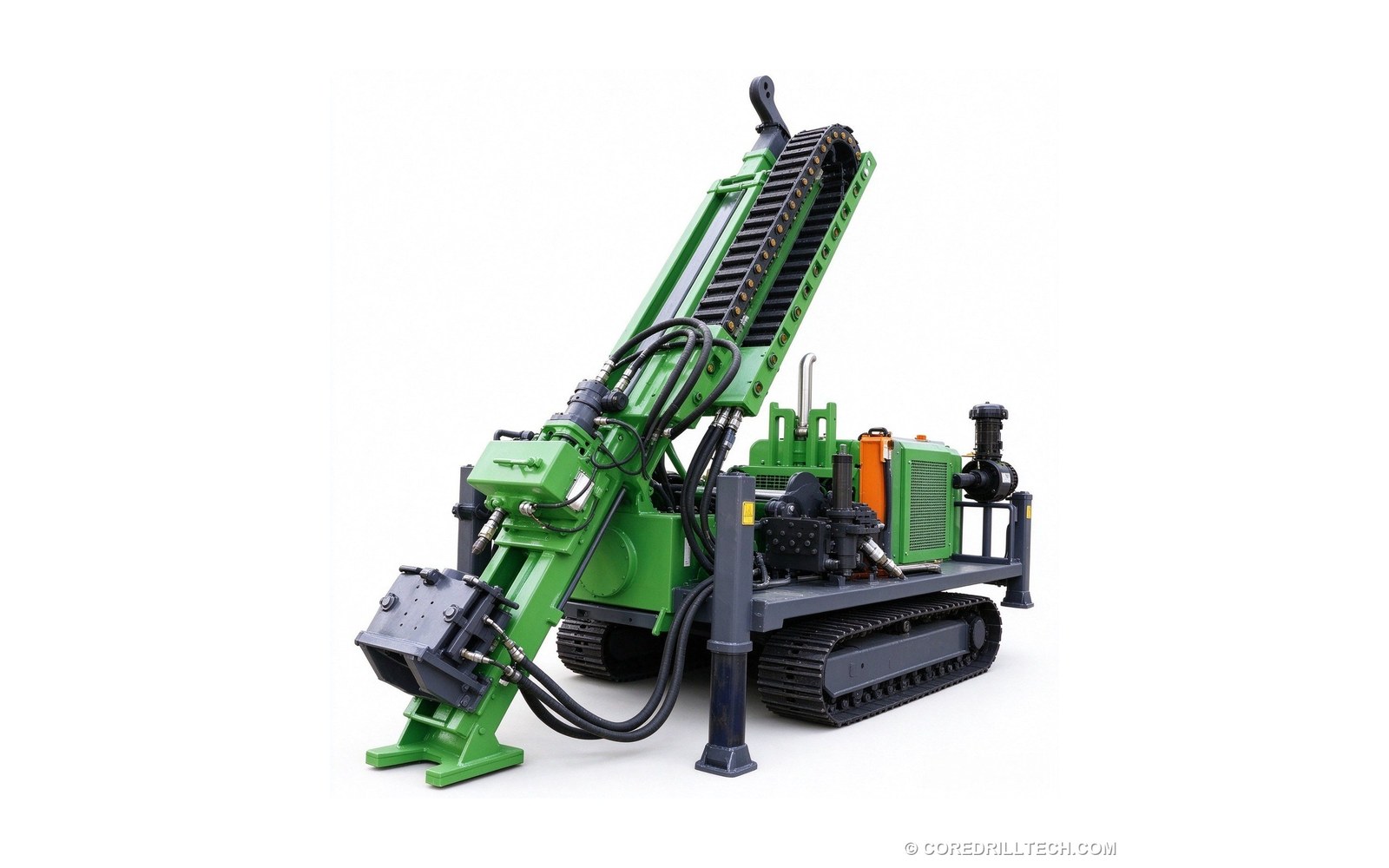
The rig also affects recovery through feed stability, rod alignment, rotation control and wireline handling — see our wireline drilling tools and rods for the tooling side of the system. However, low recovery should be investigated as a system problem rather than automatically attributed to the machine.
Frequently Asked Questions
Does a higher pump flow rate improve core recovery?
Not necessarily. Flow must be sufficient for hole cleaning, but excessive flow can contribute to erosion or instability in some formations. Determine the appropriate circulation programme from hole geometry, fluid properties and ground conditions.
Can changing the diamond bit solve low recovery?
It can help when bit selection or bit condition is the cause. It will not correct every problem, particularly unstable ground, unsuitable fluid circulation, worn core-retention parts or poor rod alignment.
What information is useful when diagnosing core loss?
Provide the depth interval, formation description, recovered-core condition, bit details, fluid information and operating parameters. Photos of the core and bit can also help narrow down the possible causes.
Need Help Reviewing a Low-Recovery Interval?
Send us the drilling depth, core photographs, bit and barrel details, fluid programme and operating records — contact us and we can help review the likely causes and identify which parts of the drilling system should be checked first.